











Judith Deschamps – AI at Life’s End, Toward a Degenerative Resubjectivization

PROJECT DURATION
2023 - 2025
PROJECT OWNER(S)
Judith Deschamps
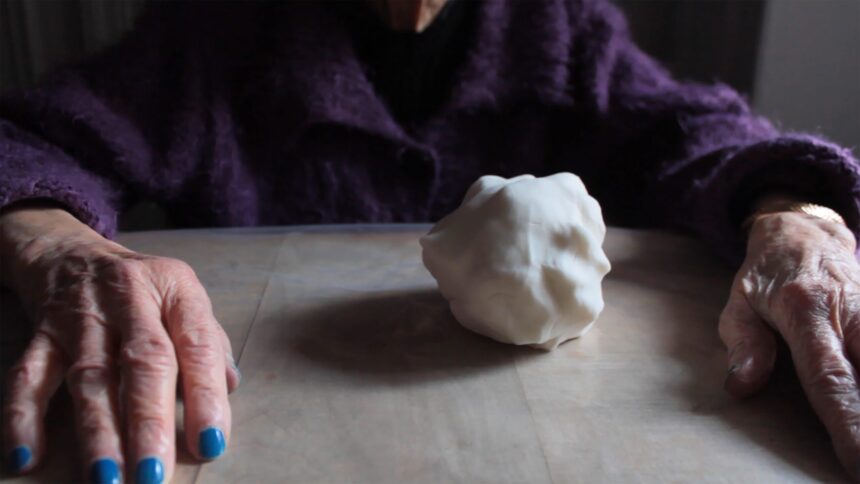
This practice-based research thesis explores the conditions that make it possible for technology to embrace finitude as the basis for an embodied, non-instrumental relationship with machines. Rooted in the dual critical observations of the invisibility of old age and the disembodied conception of artificial intelligence, it explores ways to rethink the relationship between human bodies and AI, with the aim of rehabilitating materiality and vulnerability as fundamental aspects of thought. The thesis examines the body/mind dichotomy inherited from the Cartesian tradition and perpetuated by transhumanism. This leads to fantasies of immortality and the erasure of the material substrates inherent in the workings of artificial intelligence. This research is structured around two artistic projects: the first at IRCAM explores changing voices through the collaborative reinvention of Farinelli’s singing using deep neural networks; the second is a project in a Parisian nursing home where elderly people manipulate clay to train generative AI and co-write with it. These experiments propose new forms of relationship with machines to give a voice to those capable of transforming our relationship with technology. The approach taken in this research thus reveals unimagined dimensions of artificial intelligence by reintegrating touch and vulnerability as intrinsic properties of thought and creativity.
PROJECT TEAM
Supervisor: Arnaud Regnauld, Vice President of Research at Paris 8 University, Professor of Literature (TransCrit), specializing in Digital Literature and Arts.
Co-Supervisor: Laurence Devillers, Professor of Artificial Intelligence and Ethics (LISN-CNRS), Director of the IA-HUMAAINE Chair, specialist in human-robot affective dimensions.
Associate Researcher: Gabriela Patino-Lakatos, clinical psychologist and Doctor of Education (CLEF-CIRCEFT) at Paris 8 University.
INSTITUTIONAL PARTNERS
This thesis was developed in collaboration with the Institute for Research and Coordination in Acoustics/Music (IRCAM) as part of the reinvention of the voice of the castrato Farinelli using artificial neural networks, and with the Furtado Heine nursing home, where elderly people were invited to reshape a generative text AI and co-write with it.